TABLE TENNIS TRIALS & TRIBULATIONS


I arrive early and the place is empty except for two middle-aged Chinese men sitting on a bench chatting in English.   I ask if either would like to hit, but both shake their heads “no.” In Chinese, they call over a younger man who has just entered the Triangle Table Tennis Center, a 30,000 square foot facility near the Raleigh Airport.   With forty tables, ball machines, a pro shop and coaching staff, it’s the largest such center in the nation. The men converse with him for a moment, then motion to me.


10259225_294511150708660_3160577582908610832_o.jpg

“He will hit with you,” says one, a mischievous smile crinkling his eyes.

The pained expression on the face of my hitting partner indicates a distinct lack of enthusiasm. Basically, he’s been dragooned by the older men and thinks he has to waste his time for their amusement. Without speaking, he takes his spot across the table and serves a ball. Initially, I confirm his worst fears. My first three practice shots fly long. Each time, he trudges six or eight steps back to retrieve the ball as though he is walking through quicksand carrying a boulder.   I over-compensate and hit the next several shots into the net.

“You don’t hold the racquet right,” are his first words.

“No?” I say.

He shakes his head.

“You must have just started to play,” he says, miserably.

“Not really,” I say. “I’ve been playing for over fifty years.”

“Over fifty years holding it like that?” he says. He looks disgusted.

He serves a ball and, thank goodness, I return it onto the table and begin to sustain a rally. After half a century of play, I’m categorized as an “advanced beginner;” although a star against the general population, I’m but chopped liver against “serious” players.



Bethea-Will-Shortz-and-the-Ping-Pong-Prodigy-690.jpg

*****


If my game lacks proper technique, the fault lies with my older brothers, Barry and David. They taught me to play in our cramped basement sometime during the Kennedy administration. Any missed shot found it’s way behind lawn furniture or plumbing like a hide-and-seek professional. Spiders lurked in the corners amidst award-winning webs.   I suppose you could say there was a strong incentive not to miss. Owing to the fact I was about a decade younger than both of them, I never won. It all sounds miserable. Yet, I was thrilled when one of them agreed to play even though they repeatedly sent me into those awful corners chasing errant shots.
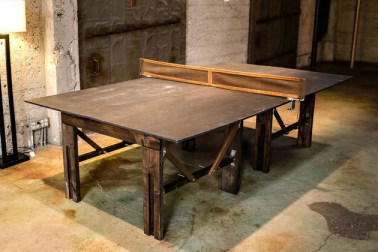


Polite-Ping-Pong-Table-5.jpg

Barry had a particularly annoying style. He played with a sandpaper paddle that made an unpleasant thwack with each shot. All of his serves went down the side of the table to my backhand so near the table edge that the ball often glanced off it, untouchable. Even knowing exactly where his shots would go, I couldn’t return them. David played with a conventional, rubberized paddle and clobbered me more conventionally.

By the time I was eight they were both away at college, and I practiced alone against the wooden wall of the closet adjacent to the table. Unfortunately, the top of the closet was open for a foot at ceiling height and high shots often disappeared into it. Once inside, they nestled amidst ancient household items that NEVER ONCE emerged, such as canvas awnings for the exterior of the house. There were also paint cans that had been fresh when the house was constructed thirty years earlier, dust and, presumably, more spiders. I rarely had enough courage to open the closet and retrieve the balls. Instead, I expended some of my miniscule baseball card budget at Woolworth’s for new balls. If only I’d thought to block the opening with cardboard. My father, who NEVER played ping pong, had an expression for such a lack of initiative: “Smart, smart, smart and then stupid.”

 

Unknown.jpeg


*****


My opponent, who still does not tell me his name, suggests we play a match consisting of best-of-five games up to eleven points. After beating me, he will then be free to play with worthier opponents. He wins the first game 11-3, and appears relieved to be so near the end of his involuntary good-deed-of-the-day.


*****


Shortly after I learned about the Center last winter, I began to attend regularly. I play one or two mornings a week against opponents of similar ability. I played in a “beginners” league one night a week and did quite well. My strange, outdated grip and one-side-of-the-paddle style flummoxes fellow bottom feeders. I enjoy playing so much I break from my usual tendency to spend no money on myself and resolve to take lessons from a pro.


*****


A J is twenty-eight-years-old. His body is lean and sinewy. He’s made for speed and precision more than brute strength. Among the highest ranked of American-born players he makes his living as a table tennis coach. How often does the IRS see THAT on a tax form? First, he examines the paddle I’d been playing with for several years. As he holds it, his facial expression suggests he’s swallowed sour milk.

agency_ping_pong_2.jpg

“What is this?” he asks.

“My paddle?” I say, unsure.

“What rubber is it?” he asks.

“Um, the kind they put on at the factory, I guess,” I say, trying to be respectful but wondering about how to answer such a question.

“You can’t play with this,” he says.

“It’s illegal?” I ask.

“It’s just, you know, dead,” he says.

My silence indicates to him that I don’t “know” what “dead” means.

“We’ll get you fixed up with a real racquet,” he says. “Let’s just hit a few balls so I can figure out what you need.”

As a sports participant and fan, I’ve always been skeptical of the validity of improvement via equipment. If a golfer, for instance, buys a newfangled, over-sized driver and, as a result, can hit thirty yards longer, is he a better golfer? If a tennis player buys space-age string that increases the spin or speed of his shots by twenty percent, is he a better player?

Due in part to my moral ambivalence and also to my frugality, I’ve never focused on equipment. Unlike my buddies who dissect the relative merits of one tennis string versus another ad nauseum, I’m proud to adjust to even a borrowed racquet after just a few swings. My racquets are usually bought on-line and arrive, already strung with basic material, via UPS.

But ping pong is different, according to A J: “You can keep your weird grip,” he says, as we gently rally. “It might even be an advantage against people who have never seen it before. But your skins will have to be better, as well as your blade.”

Skins? Blade? Yes, skins are what real players call the black and red rubber surfaces on opposite sides of their paddles. Before I arrived at the Center, I didn’t know that the two sides could be different. Naturally, real players don’t call a paddle a paddle but, rather, a “racquet.” And they don’t call a handle a handle but, rather, a “blade.” And when they refer to skins, they don’t mean the pimply rubber surfaces that come in a set from Walmart but, rather, highly specialized, customized surfaces that range from $50-$200 a skin. By the way, these “skins” must be replaced every several months for optimal performance.


stiga-classic.jpg

After hitting with A J for a few minutes, it occurs to me he never misses. Whatever random shot I hit, he calmly returns at the same pace and location. It’s uncanny. It’s impressive. I think to myself: “I’d like to be A J – still in his twenties and terrific at what he does.” At that moment, he says: “It must be great to be retired and have time to do whatever you want. I’m jealous.”

I suppose the grass is always greener….


*****


In the second game I realize my opponent’s backhand, whatever his name is, is much weaker than his forehand. Also, the new “anti-spin” skin that A J had recommended for my red side is ruining his timing, just as A J promised it would. When I remember to use it, the livelier skin on my black side creates enough spin to frustrate him. When he swings and misses for the second point in a row, I’ve won 11-9. I repeat the result in the third game. My opponent is now sweating profusely. He curses in Chinese. His friends say something to him and laugh. He is stone-faced.


*****


Ping pong actually figures in family history prior to my brothers and me. I’m told the school nurse circa 1935 thought my mother had a weak heart. As a result, she couldn’t partake in strenuous activities and spent gym classes playing ping pong. I rallied with her in my basement five years ago. She hit pretty well! And she’s still alive and well – you do the math – the nurse was wrong.


Unknown-1.jpeg


*****


I lose the fourth game. My mind is cluttered with doubt that I can win the match against such a strong opponent. I certainly have his full attention now. “It’d still be a moral victory,” I think, as the fifth and deciding game begins. “Forget that,” I correct myself. “Don’t settle for a moral victory. Do what A J would do. Batter his backhand. Stay calm. Concentrate. Don’t concentrate too hard. Relax. Don’t relax too much. Move your feet. Follow through, etc.” The mind can harbor a lot of thoughts, some contradictory, at the same time.


*****


In an early lesson, except for my grip, A J criticized every aspect of my game. It turns out I’d been improvising every shot I’d ever hit. “You have to have a consistent swing,” he said. “Don’t worry about the result,” he continued. “Do it properly.” He’s retraining me against numerous long-developed bad habits and several habits that are good, if only I were playing tennis. It surprises me to realize that the two sports, though similar on the surface, require distinctly different swings.

At one point during my first lesson, I recall, I said to A J: “There are twenty things I have to remember on each shot. This is almost as bad as golf.” At the time, he didn’t respond. During this morning’s lesson, A J told me what I can expect after several more months of lessons and, in so doing, used the terms “hook” and “slice.” A cold shiver ran down my spine.

*****


The fifth game goes back and forth. I’m ahead 4-3, then behind 7-6. A late string of good luck treats me to a Hollywood ending, albeit low budget. I win 11-9. I expect my opponent to be angry. Instead, he puts down his racquet and comes to me with sweaty hand out-stretched. “Good game,” he says. “My name is James. Let’s play again now.”

I’m honored. I’ve passed a test. I can’t wait to tell A J.



Unknown-2.jpeg


PLANE TRUTH


It’s not news to report that air travel today isn’t a pleasure. It’s my impression the experience is becoming increasingly miserable. I suspect the positive excitement of air travel began to wane when the late-60’s hijackings to Cuba inspired the first metal detectors. It’s become even more joyless due to depredations by terrorists in the intervening decades. It’s hard to believe now that one of my earliest memories is of my grandfather taking me to the Philadelphia Airport to WATCH planes take off and land. Around 1961 you could just walk into the terminal, go to the windows, and watch.

Unknown.jpeg

Along with terrorists, the experience has been shaped, not in a good way, by accountants. Airlines squeeze revenue from each seat and I do mean squeeze. Being tall is advantageous when visiting a crowded museum or movie theatre, but when I fly I wish I were the size of a jockey. Perhaps it’s my imagination, but it seems whoever sits around me in a plane is afflicted by one or more of the following: obesity; bad breath; a hacking cough; a pneumonia; restless leg syndrome; and, perhaps worst of all, logorrhea.

Unknown-2.jpeg

Personally, I never loved air travel. My first flight EVER, from Philadelphia to Chicago circa 1964, resulted in the use of the barf bag. Though illness doesn’t produce that effect in me, motion sometimes does – I’ve even become queasy on the Circle Line boat ride around Manhattan. The plane event inspired the acquisition of Dramamine for every subsequent flight until the last decade or so, at which point I simply decided “enough, I’m over it.” Needless to say, I never aspired to be an astronaut.

The only aspect of air travel that is better than “the good old days” is the smoking ban. I flew from San Francisco to Newark on the day it went into effect in 1991. I remember it clearly because a television reporter asked for my opinion in the waiting area. I said something like: “What idiot ever allowed it in the first place?” I doubt my intemperate clip made it to the small screen. But, as they say now, “Seriously?” Well within my lifetime, people smoked inside confined, flying compartments as though the already-fetid, germ-filled air wasn’t disgusting enough!

And what about the food? Arguably, the fact that most domestic flights now offer none is a positive development considering airline cuisine. But shouldn’t they provide something edible? The situation became so bleak by the beginning of this millennium Jet Blue gained positive press by providing blue potato chips. Now, with airlines making more money than they can spend I note that “snacks” are making a comeback. If only one could make a meal of mini pretzels and peanuts.


Unknown-1.jpeg


*****


Flying presents a philosophical dilemma with regard to how I approach life. When I was young I wished away a lot of time. For instance, during the winters I counted down the weeks until the baseball season. During college, I wished away exam weeks. My law school years were basically one long countdown of 1,051 days.

Now that I’m older, I  try to avoid such thinking. Upon entering middle age, I largely limited my “count-downs” to the cold weather months, and in recent years living in the south, even winter is tolerable. In sum, as time seems to pass faster, I’m philosophically opposed to wishing it away.

Flying is an exception.   I wish away every second of time spent on airplanes. I try to be the last to enter (unless carry-on luggage requires me to join the scrum for limited storage space) and I’m the first to jump up at the destination.   Once or twice during a flight, I silently count the seconds from zero to sixty and then backwards again to zero so I know the minutes pass. After I complete a count in English I do it in Spanish or German to amuse myself. My wife thinks I’m nuts. Perhaps. Am I the only one who does this?


Unknown-4.jpeg


*****


I’m afraid Mark Twain would reach the same conclusion about air travel as he reached about the weather: “Everyone complains, but no one does anything about it.” There’s simply no other practical way to reach many places one wants to visit. That’s the reality; that’s the plane truth.


Unknown-5.jpeg


HOME FOR SALE


Our house is for sale and the experience is somewhat unnerving. Like a high school senior with applications to ten colleges we have no idea what or where our lives will be in ten months. The only thing for certain is uncertainty. Not only do we not know when or for what price someone will buy our home, we have no idea what sort of buyer to expect. We learned that lesson the last time around.


Unknown-1.jpeg


*****


In 2008, in the depths of the most recent housing and stock market busts, we put our house in Ramsey, NJ up for sale. Two years earlier, in the flush of the real estate and stock market booms that had preceded the busts, we’d impulsively bought a house in North Carolina and started a two-year process to move south.

The timing cost us money, but no need to second-guess water for having flowed under the bridge. In the world of bold real estate moves, the relevant cliché’ is: “You win some, you lose some.”

Concurrent with the downtown in the 2008 market my wife, Katie, obtained her real estate license. Cause and effect? Bad luck?


Unknown.jpeg


I know this: In six months on the job she had customers who missed appointments; customers who couldn’t make decisions; and, customers who made the attitude “the customer is always right” impossible to maintain. Despite working every weekend she never made a sale nor obtained a listing.

But she did have the inside track on listing our own home. I interviewed her carefully:

“What commission will you charge?” I asked.

“None,” she said. “We’ll save at least 1.5%.”

“You’re hired,” I said.


*****


In anticipation of listing the home, Katie had a carload of agents from her office visit and offer suggestions.   As a result, we moved furnishings around and painted several walls. We weren’t exactly “staged,” but some wisdom from experience was put to work.   A cedar shake contemporary with unique window shapes and exposed beams, our house was not for everyone. For a buyer with traditional tastes (ninety percent, according to studies), our house would not appeal.

Concerned that selling might be a slog we listed on September 1, nearly a year before our mid-2009 move date.   If a buyer appeared and offered a reasonable price, we would do the deal, regardless of closing date, even if we had to move out early. After all, our likeliest buyer would be open to the unusual, the absurd and the lack of any ceilings over most of the first floor. We couldn’t risk losing them.

The first few showings weren’t promising. “Weird,” said one review. “Too modern for us,” said another. One customer was open to a contemporary home but required a swimming pool.  A foreign customer indicated he liked the interior but wanted us to replace the exterior siding.

“Is anything wrong with it?” Katie asked.

“No, they just don’t like it,” said their agent.

“That would cost $40,000,” said Katie.

The agent offered the telephone equivalent of a shrug.

Several other lookers needed to sell their homes first, a contingency we wouldn’t consider. Most were simply not interested, either due to price or location or the sheer unusualness of the construction. Since the etiquette is for the homeowner to not be present for a showing I never saw the prospective buyers. Feedback filtered from realtors to Katie over the telephone.


Unknown-2.jpeg


*****


One evening Katie received a phone call from a shopper who said he’d located our listing himself on his computer.   Though on-line shopping is now the norm, in 2008, buyers were just beginning to shift from having a realtor compile a list of houses for them to see. The caller (called Joseph herein) had no agent and, therefore, would be Katie’s customer if he chose to buy. We were excited at the prospect of saving an additional 1.5% but also concerned he was wasting Katie’s time.

“Does he have a family?” I asked.

“No, he’s single,” said Katie.

“He wants a four bedroom house in the suburbs for himself?” I asked.

“He said he wants to see it,” said Katie. “It can’t hurt, right?”

“Good point,” I said. “So is he coming out next weekend?” I asked.

“Actually,” he wants to come tomorrow morning at 7,” said Katie.

“Seven a.m.!” I said, intrigued. “Why?”

“He said he works odd hours,” said Katie.

“Hmmm,” I said. “Sounds strange. I’ll hang around to see him.”


*****


At night, before falling asleep, we speculated what Joseph might have found attractive about the on-line picture of our house.

“Maybe the rhombus-shaped windows,” I guessed.

“Maybe the decks shaped like a ship,” said Katie.

“Or the pile of boulders in the front yard instead of grass. He won’t have to mow them,” I said.

By 7:20 the next morning we’d heard nothing from Joseph.

“Probably not showing up,” I said, the voice of skepticism.

“Don’t be negative,” said Katie, though she was also fighting the fatigue of dealing with disappointments.

At that moment a massive black Range Rover sped around the corner and pulled into our driveway. I peaked through our bedroom blinds to see it stop abruptly just inches from our garage door. The driver remained inside behind tinted glass for several minutes talking on a cell-phone, long enough for me to express more negativity. “Joseph might be a mobster.”


Unknown-7.jpeg

Finally, he emerged, a middle-aged man with medium-dark features and a long, black ponytail. He had earrings, tattoos and wore a leather jacket. “This guy is not Mr. Suburbia,” I reported to Katie while we went to open the front door. “Looks more like Cheech or Chong.”

The doorbell rang and Katie greeted Joseph while I hung back, curious but vigilant. Though his affect was far more motorcycle gang than soccer dad he was soft-spoken and polite.

“Sorry for being late,” he said. “I work crazy hours.”

“What do you do?” asked Katie.

“I’m a drummer in a band,” he said.


Unknown-4.jpeg


“Wow,” said Katie. “Our children might know your band but we’re not really up on the local music scene, so….”

“You might have heard of us,” he said. “The Allman Brothers.”

“THE Allman Brothers?” repeated Katie.

“The ONLY Allman Brothers,” he said, smiling.

Joseph walked past us through the foyer and gazed into our living room, while we were still processing our shock. He didn’t appear to notice the cathedral-like ceiling; he didn’t look out the windows to the woods beyond; he didn’t remark on the vast expanse of open space. He walked straight to the fireplace, the most traditional part of the entire house.

“Is it a real fireplace?” he asked, a dreamy expression on his face.

“Yes,” said Katie.

“Does it work with wood?” Joseph asked.

“Yes,” said Katie. She glanced at me as though to say: “This is weird.”

“Can you make a fire?” he asked.

“Sure,” said Katie, who motioned to me to gather some wood.

“Can I sit here?” he asked, taking a seat on a couch in front of the hearth.

He watched as we got the flames going. I couldn’t help wondering why the most unexceptional aspect of our house appealed so much to this famous musician.


Unknown-6.jpeg


We sat down on a sofa across from him and watched the fire crackle. Katie and I hoped the flue would clear the smoke more effectively than it usually did. Joseph looked like the most contented man on earth.

After the fire died down he took a quick look around the house. Finally, he said: “I’ll take it. I’ve always wanted a working fireplace.”

It certainly was not up to Katie to point out that every house in our neighborhood had a fireplace. Probably, most houses in our town had fireplaces. Over the next few days I worked out the terms of the contract with the drummer’s attorney. He barely negotiated off our asking price. We closed two months later.


*****

When our daughter, Sarah, was little, her favorite books were the Berenstain Bears series. One was entitled: “Don’t Judge a Book by its Cover.” The expression always stayed with me but I’d never applied it to my own life until dealing with our buyer, the vaguely scary-looking sweetheart of a man who played drums for one of the wildest rock bands in history. Due to my ecological sympathies, my view of massive SUV’s is still reflexively negative. But my view of pony-tailed, tattooed, earring-wearing, leather-clad men is as non-judgmental as can be.


OUR GREATEST PRESIDENT

As the election season enters its twentieth or thirtieth month, it seems there is no end in sight.  Doubtless, on the day after the November election this year, those of us who are not moving to Canada or Costa Rica will be subjected to media speculation about who will run in 2020.  A selection of narcissists, egotists and attention-seekers (redundancy used for emphasis) will try to gain consideration as candidates.

Common in their rhetoric will be claims to the legacies of prior presidents.  Republicans link themselves to Lincoln and Reagan.  Democrats hearken back to Franklin Roosevelt.  Both sides will want to sound “Jeffersonian.”  Few recognize our truly greatest president.  This oversight is about to end.

*****

In eleventh grade I took a course on “American Heroes.”    Heroism, to me, consisted of a mixture of acknowledged accomplishments, fame and admiration on the part of the public. When the time came for a final paper about heroism, the teacher offered topics from a list of standard categories.   I could examine explorers, politicians, sports figures or scientists.

Though tempted by “sports figures,” of course, I rejected the topic as too obvious; it was something I would have chosen in third or fourth grade.  Instead, I surveyed how Presidents were or were not considered heroes, and why.  To do this, I summarized a number of encyclopedic entries and skimmed several biographies.

Unknown-4.jpeg

Some presidents, like Kennedy, seemed heroic even though they hadn’t actually accomplished much.  Others like Franklin Roosevelt seemed heroic and deserved to be.  Franklin Pierce and Millard Fillmore were not considered heroic even by the few people who had heard of them.  On closer examination, it appeared their obscurity was deserved.  My forgettable paper received a forgettable grade, and I moved on with its contents largely forgotten.  But this year’s clown car of candidates provoked me to recall my only “discovery,” a man I believe should be a hero, who is not.

*****

James K. Polk had a terrible publicist.   His profile doesn’t appear on Mt. Rushmore.

Unknown-1.jpeg

In fact, other than his gravesite and a small museum in Nashville, Tennessee, there is no trace of him on the contemporary scene – no college, no institute and no national park.  It surely didn’t help that he died only three months after leaving office.  He didn’t get to buff a ”legacy,” as they call it nowadays, the way Ford, Clinton, and the first president Bush have.  He didn’t have a library or a speaking tour or the chance to make millions speaking to Goldman Sachs.   Whatever the cause of Polk’s obscurity, his accomplishments stand in stark contrast to those of every president in my lifetime and make a laughing stock of the present candidates.

Polk declared upon election that he would only serve one term from 1845-1849 and then go home.  He meant it!  Can you imagine?  When he took office, Polk declared four major goals of his administration and proceeded to accomplish ALL of them, including:  vast extension of American territory via the Mexican-American war; overhaul of our tariff structure that produced a manufacturing boom; establishment of an independent Treasury that streamlined American commerce; and, the addition of Oregon and Washington to the United States by way of threatening Great Britain with war if they did not abandon their claims to the same land.


images.jpeg

Detractors and political rivals claimed that Polk was TOO effective.  Ulysses Grant, for one, thought Polk unmanly for picking on weak opponents such as Mexico.  Others argued that “Manifest Destiny,” the philosophy that guided Polk’s insistence that America deserved the West indicated excessive pride.

Abolitionists argued that Tennessean Polk took too strong a stand in favor of slavery.  Indeed, like a typical southern landowner, Polk owned slaves.  Unlike Jefferson, however, he is not known to have impregnated any.  He took a pragmatic approach to politics, a quality sorely lacking at present.  He suggested the new northwestern states would be free of slavery if Texas would enter the union as a slave state.  The compromise earned the backing of Congress for both acquisitions.

We have no recordings of Polk’s speeches, of course, but he was said to have been spellbinding and clear, his logic unassailable.  Due to short stature, he stood atop tree stumps to speak and became known as “Napoleon of the Stump.”  The term “stump speech” thus entered the lexicon.

*****

Unknown-3.jpeg

I am not the only person to have noted Polk’s qualities.  On several lists of “greatest presidents” prepared in the mid-twentieth century he appears in 10th or 11th place.  Some refer to him as “Best of the Unknowns,” or the like.  But recent history should propel him to the top of the list since his qualities are now so rare.  Since Truman, perhaps, our nation hasn’t enjoyed a president who spoke the plain truth.  And we’ve certainly not known one to stick to one term.

As a result, when I hear candidates worship at the altar of Saint Reagan or Saint Kennedy I can’t reach the mute button quickly enough.  But if I ever hear one promise to govern like James K. Polk, after I pick myself up off the floor, he’ll have my vote.


DEALING WITH THE UNKNOWN


My personal experience with anonymous correspondence is limited to one unhappy event.   Around 1990, several years after I opened my law office, the New Jersey Bar Association alleged that the sign posted on the street in front of my office was improper. In the sign I described myself as “Stuart Sanders, Real Estate Specialist.” To me, this represented the truth, since my practice consisted almost entirely of real estate closings.

The Ethics Committee of the Association viewed the matter differently. They wrote that they had received a letter from a fellow attorney who stated correctly, in their view, the word “Specialist” belongs only to those who earn certificates as “Civil” or “Criminal” trial attorneys. Their letter told me to remove or correct the sign within fifteen days. Outraged, I wrote back, asking rhetorically: “What is more unethical: to represent the true focus of my law practice to the public, or to file an anonymous complaint behind a colleague’s back?”Unknown.jpeg

During the next several days, while I awaited a response that never came, I hardly lived five minutes without wallowing in righteous indignation. I tortured my poor office staff and family with a barrage of braying, along the lines of: “I’ll sue them; I’ll assert my constitutional right to freedom of speech; how can they own a word?”

At night, I experienced more than a few sleepless hours with another question: “Who filed the complaint? How do I get revenge? Do I wish for a painful disease or mere bankruptcy to be visited upon my so-called colleague?”

Gradually, after a week or so, the sting of the situation subsided. I paid a sign company to replace the word “Specialist” with “Closings.” I decided that to argue with the Bar’s Ethics Committee would not be a brilliant career move. And I ceased evaluating every local attorney I dealt with to see if they were “the one.” “Don’t give whoever it is the satisfaction,” I instructed myself.


*****


Two years later, I’d nearly forgotten the incident when an elderly attorney from a neighboring town arrived for a closing. Although I’d met him years before, he wasn’t someone I saw often. He’d certainly never crossed my mind as a suspect when I’d laid awake imagining retribution. His colleagues knew him for two things, namely: alcoholism; and, related to that, having run over and killed a youngster with his town’s fire engine while driving to a July 4th celebration. As town attorney and its fire chief, he’d managed to squelch any personal responsibility for the tragedy, but the legal community knew the inside story.

After offering a wet-fish handshake, he said: “I see you’re not in violation anymore.”

“Hunh?” I said, not certain what he meant.

“Your sign,” he said, his rheumy eyes twinkling with mischief and triumph.

“You fixed it. My letter worked.”                                        images.png

I glared at him. Several verbal responses arose in my mind, all barbed with poison. But, as I considered his entire presence, from his tattered and stained sports jacket, to his erratically shaved jowls, to the vast belly that almost prevented him from reaching the closing table, I found myself unable to deliver one. Apparently, the awful things I’d wished for had occurred to him already. In fact, even worse than I could have dreamed.

“Yes,” I finally said. “And business has never been better.”

Unknown-1.jpeg

*****


Fast forward twenty years: I’m nearly at the four-year anniversary of starting this blog and have posted 160 stories and essays. Most weeks, I have between 100 and 200 “views” and am often surprised by which posts are popular. Sometimes, the stories I think are best fall like stones in water. And posts I’ve belabored end up being relative successes.  Readers or “followers” need not be concerned that I monitor their individual reading habits. That level of detail is unavailable. But my hosting site does tell me in what country my readers access the blog.

The overwhelming majority of my “reads” take place in the United States. But many also occur in Canada and Costa Rica where I have friends and acquaintances. Occasionally, a dedicated reader travels to Europe or Asia and checks my blog as they go, leaving me with a tantalizing string of countries. When a friend spent several months in and around Vietnam last year I had my first “views” from Cambodia and Laos; during her honeymoon last year, my daughter delivered my first hits from Sri Lanka and the Maldives.

Unknown-1.pngUnknown-3.jpeg

*****


Last year I posted a story about my father’s unlikely friendship with former Philadelphia mayor Frank Rizzo. It briefly went viral in a minor way when hundreds of readers accessed it over a two-day period. I never learned who they were. Presumably, one person happened upon the story and referred it to friends or co-workers. No one commented, however. How mysterious to not know with whom I’d struck a nerve, and why!

Other times I know exactly who has binged on my blog. There are several friends who do not read every post but, if they know I will be at a social event, might read eight or ten in the day or two before we meet. They discuss aspects of the posts with me in minute detail and often offer insights I hadn’t considered when I wrote. I appreciate their interest.

Unknown

In the past two months a tantalizing mystery has arisen with a reader I’ve come to think of as “The Brazilian.” “Reads” have occurred almost daily in Brazil. Usually, there is one, though several times, there have been two or three in a day. I cannot think of anyone I know who is living or traveling in Brazil. This person, whoever he or she is, has been remarkably dedicated. I’m flattered! Yet, they have never left a comment. Maybe they don’t realize they can comment or, perhaps, they prefer to remain anonymous.

Is my Brazil reader a student learning English? Is he or she somehow fascinated by the minutiae of my existence or by my views on current events? I can’t tell which stories they have read. They could be reading the most recent posts or they could be scrolling back several years to find stories of interest.

So now, like an actor breaking character and speaking directly to the audience, I’m herein communicating to my reader in Brazil. You know who you are! How did you become a reader? What are your favorite stories or story-types? How did you alight upon my blog in the first place? Are there subjects you particularly enjoy? Do you have any questions I could answer? My imagination runs wild! In my dreams, I wonder if you are a major movie producer who is just waiting for the right moment to offer me a “deal.”

If you’d rather not respond, that’s fine. One of the enjoyable aspects of writing stories (as opposed to editing and re-writing and occasionally abandoning stories that don’t work), is not knowing how they’ll be received after I push the ”publish” button. The mystery fascinates me. At least, having written this post, the “Brazil” questions are out there, I’m less likely to express puzzlement every day. Compared to some anonymous situations, this one is a pleasure.


119591110


CHEF SANDERS


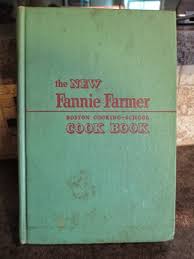
We’ve been invited to a dinner party this evening, and I’ve been asked to make my famous cheese pie for dessert. Technically, it’s a “sour cream cheesecake” and derives from pages 611-612 of the 1948 edition of the Fannie Farmer Cookbook.   Few of my fans know that. They believe (or claim to believe) that I’ve created the recipe through decades of trial and error. Or, perhaps, they believe it comes from a long line of family pastry recipes. Uncomfortable living a lie, but not so uncomfortable that I would tell them directly, I write this post to blow my own cover.


images

*****

The culinary arts are not a field in which I’ve excelled. Though pretty solid in breakfast options, e.g., French toast, pancakes, oatmeal, my greatest skill in the estimation of my children is the ability to spread butter and jelly evenly on a piece of toast. All three lauded my expertise when they lived at home. Did they simply feign enthusiasm to extract additional before-bed snacks? Is that a cynical question? No, I believe I truly am gifted at spreading. Still, their flattery highlighted the lack of other tasty arrows in my quiver. EXCEPT for the cheese pie.

Somehow, to the apparent joy and relief of my wife, Katie, every time we are invited to a dinner or party my cheese pie is requested as our contribution. Accordingly, we keep a supply of pie-crusts in the pantry. And I know where to find Breakstone sour cream and Philadelphia cream cheese in the local supermarket. (Only name brands suffice).  Has Katie created this demand with subtle hints to our hosts? Am I being cynical again?

UnknownUnknown-1

*****


My lack of development in the kitchen can probably be attributed to the model established by my father. Note that I did not say: “blamed.” He was, after all, a normal man of his era in the sense that he did not consider the kitchen to be his domain.   Plus, a child shouldn’t blame every shortfall on his parents any more than he should claim a child’s triumphs. Heaven knows I’m not implicated in my son’s gift for chemistry. Like me, my father had one specialty, namely: fresh-squeezed orange juice.

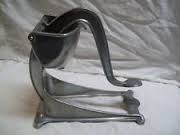
In my childhood recollection, my father used an ancient, hand-powered metal machine that looked like a combination of a water pump and an oil derrick to make delicious juice 365 days a year. More likely, there were times when oranges were not available, or we ran out. But memory sometimes gilds reality to the point of improbability. For this story, I’ll just go with it.

images-1

Each morning, I arrived in the breakfast room to the sound of KYW News Radio in the background. Several steps away, in the kitchen, my father would be slicing four or five oranges in half and crushing them into juice. He would place the empty rinds in the previous day’s newspaper and fastidiously discard them in the trashcan. He then placed three glasses with bright orange nectar on the round breakfast table for me, my mother and himself.

We rarely spoke during this ritual except for him to express disgust at the odors that our cats, Farah and Cubbie, had produced in their litter boxes in the adjoining powder room. This communication by my father was non-verbal, along the lines of “Feh, eccch, phew.” My job was to empty the messes before sitting down to eat. My mother would typically be preparing eggs or toast or pancakes or assembling bowls of cereal.


*****

The 1960’s were a simpler time in many ways. Orange juice, for instance, was known as a pure pleasure. I enjoyed it; I expected it; I hadn’t yet learned to say: “But it has so much sugar,” as we do today. “Real” orange juice also didn’t yet come in a package; Minute Maid was only available in concentrated form and tasted far inferior. Dare I say I took my father’s efforts for granted?

                                                                                     Unknown-2

     When I returned home from college or law school a decade later, packaged orange juice had improved markedly. I noted that my father’s juice machine had migrated to the back of a drawer; he usually poured juice from a box by then. We all remarked at how “real” it tasted. Only now, four decades later, do I recognize we’d lost something special.


*****


Not all my cream cheese pies have been successful. Once, I forgot to add sugar. Another time, I absent-mindedly doubled the recipe and couldn’t figure out why the pie erupted volcanically all over the oven. Worst of all, I once mistook the cinnamon container (an ingenious ingredient I add between the cream cheese and sour cream layers) for a curry powder container. They look alike! Really, they do! The taste was… not so good.

Unknown-3Unknown-4

I’m still producing cream cheese pies even though we’ve deduced in recent years that I am lactose intolerant. This malady has caused my personal consumption to decline, though not to disappear.  After all, the chef must make sure his product is decent, right? But I’m less inclined to eat half a pie over a two-day period as I might have in the past.

Unknown-5

Today’s pie has turned out successfully. Per usual, I regret not having made a little mini-pie to enjoy at home tomorrow. Thinking of the thin legacy of Sanders men in the kitchen, I think I’ll go down the basement now and see if I can locate a box that holds the antique juicer. Damn the sugar. It’s time we experienced something delicious.


GAMBLING


We didn’t win the Powerball last week. I suppose I wouldn’t be writing this if we had; I’d be meeting with lawyers and accountants and, possibly, plastic surgeons.   The fact that we even played is unusual. I’m a dyed-in-the-wool realist in such matters and never indulge in the awful odds of a lottery. But my wife, Katie, insisted we participate in the vast national hullabaloo and contributed $20 to the cause. Every cell of my body knew we were wasting money, but I have to admit I spent several seconds considering how wonderful it would be to have her tell me “I told you so” for the rest of our lives.

*****

The trajectory of my gambling career is modest. It reached a peak with my first effort, at about age 18, when I won a then-lordly sum of $50 at roulette in the newly opened Atlantic City. So enthused was I with this windfall that I briefly pondered gambling trips as a regular activity. Over the next several years, however, my one win receded into the mists of memory, never to be repeated. My losing streak now measures fifteen-twenty well-spaced efforts over nearly forty years.28978733

Only once did I approach gambling with a systematic plan to win. When I was in my forties and had some time and cash available, I accompanied Katie on a visit to Atlantic City during the State teacher’s convention, where she marketed an educational book she’d written. Though I spent several hours with her, manning a booth at a book show, I also spent an afternoon at the roulette table. I’d read several articles about the strategy of “doubling up,” and I looked forward to my assured success.

Doubling up involves placing a bet not on a specific number or numbers but on the color black or red. There is nearly a fifty percent chance on each turn of the wheel landing on black or red, except that there are also two green slots on a roulette wheel. The latter afford the casino their near-six percent advantage. For my purposes, however, I viewed my chances on each spin of the wheel as fifty-fifty, and I felt confident that if I lost $20 on the first try, I could move my bet up to $40, then $80, etc. Surely I would win eventually and then start over at $20. After six wins, for instance, I would be ahead by $120. The betting would not be exciting, and would not reward the superstitious selection of family birthdays or “lucky numbers” or any of the other “strategies” that people employ to play roulette. But VICTORY would be mine. Accordingly, when I started, my wallet contained $1,000 in twenty dollar bills.

free_2386004                                                            *****


Feeling smug as I walked several blocks from the convention center to the casinos, I thought to myself: “How foolish real gamblers are. I might be the only one with enough discipline to make certain I leave with more money than when I arrive.”

Not wanting to loiter long on Atlantic City’s less-than-inviting streets, I entered the closest casino. To me, they are interchangeable, with the same garish décor, noise and smoke. In retrospect, I hope I didn’t patronize one of Trump’s but, at the time, it made no difference to me.

I walked past the clanging slots area, where guests deposit their money as fast as possible into machines aptly named “one-armed bandits.”


45443933

I continued past the blackjack tables with players deep in concentration, confident beyond reason, in my opinion, that they will outsmart the dealer and the cards. Past the craps table, I continued, amazed at the hopes fixed on players’ faces, most destined to be disappointed. Finally, I found the roulette wheels, a relatively quiet oasis.

I observed several rounds before I traded my cash for $20 chips. $1,000 makes a satisfying pile of chips. I felt like a real “player,” and yet, I knew that I was more than merely playing. I was there to make money.

Three or four people at the table selected their favorite numbers with looks of concentration completely out of proportion to the likelihood their “choice” would be advantageous. In fact, I knew, there was no way to “beat” a roulette wheel except through my strategy, the impersonal, unemotional, but patient doubling up.

*****


Finally, I waded in. I looked forward to watching my pile of chips grow, however slowly. I put $20 on red. Around and around went the wheel. It landed on black. I lost. No problem.

I put $40 on red. I wondered if house management would eventually tell me to leave the table, after they realized my strategy couldn’t lose. The wheel circled. Black again. Okay.


free_14053185

I put $80 on red. I felt pity for the players around me as their hands hovered in indecision over one number or another. I was free from such mental anguish. Geez, it landed on 00, a green space. “What are the chances?” I said to myself, though I knew they were one in nineteen, and shook my head in commiseration with several other players, losers all. After all, no one’s birthday is 00. The dealer, a young Asian man, wiped away my chips again.

I put $160 on red. “This is going to take longer than I’d hoped, but it’ll come around,” I thought to myself. The wheel landed on black again. Now, several of the people around the table were looking at ME with pity.

I counted out $320 in chips and placed them, with a sigh, on red. Even the dealer broke his stone face and established eye contact with me. He spun the wheel. “Did he think me a fool or a wise man?” I wondered, as the wheel circled. It stopped between two numbers, a red and a black, the needle perched for a long moment between them. It settled, agonizingly, on black.

Having now lost $620, in order to continue my strategy, I would have had to bet $640 on the next spin. I couldn’t do it; my nerve had receded along with my pile of chips. I put one lonely $20 chip on red. Against all rationality, I decided I had to break the losing streak, somehow. Yet, my mind was also torn. If I won with a $20 bet, I’d only earn $20 back in winnings. I’d still be $600 behind. I almost hoped to lose. Such cognitive dissonance! I lost.

62896312


*****


Feeling both foolish and, now, morose, I continued up the sequence to $40 and $80, losing again and again. I started over again, at $20, and lost three more times. Only $280 remained from my original $1,000 and the wheel had landed on black eleven times in a row. The chance of that happening, I calculated, was one in 2,048.

Now, I realize the chances of each individual red or black spin, like a coin flip, is one in two. But my mind began to fixate on the CERTAINTY that my “luck” was bound to change. The wheel could not, the now resurgent irrational part of my mind insisted, land on black again. I placed my entire $280 collection of chips on red. The dealer spun. I took a deep breath. I lost again.

A one in 4,096 set of circumstances had occurred to cost me an even $1,000. I refused to look at the dealer or the other players as I trudged out of the casino.   I didn’t know if I felt more stupid or more unlucky. Either was bad. Katie was sympathetic. “Well, at least you had fun,” she said.   “Didn’t you?” she added, hopeful.

I shook my head. “There was nothing fun about it,” I said. I admit now, fifteen years or so later, that I only owned up to having lost $500. When she reads this, she will learn for the first time that the loss was $1,000.

*****

Other than a couple of near instant losses of $10 in slot machines, I am fully reformed. Since I want intelligent analysis to dominate my financial decisions, I don’t gamble. My money is invested in SAFE places, RATIONAL places, LEGITIMATE places, such as the stock market. Hmmmmm.


REAR END REVIEW

I’m the envy of several toddlers in the airport waiting area. My canary yellow blow-up floatie features pictures of animals and birds and draws their attention like cotton candy. “Look,” says a little girl, tugging at her mother’s arm. “That man has a ducky.” Indeed, I’m a spectacle as I ease down on the donut-shaped toy and try to relax. I smile at the girl, and wish I could explain the reason for my use of an object so much more appropriate for her.


IMG_2214

Merely sitting seems a major accomplishment to me, nearly three weeks after a lovely but routine vacation in Costa Rica became a trip I’ll remember for life. Emergency hemorrhoid surgery has that effect.
*****

Is there a worse location on the human body to undergo surgery than the rectum? It’s possible, but I think this is certainly up there in the top two or three.
“How did this happen?” people ask. “Did you know you had a problem?”
Well, yes, a doctor warned a few years ago, during a colonoscopy (now WAY down the list of unpleasant medical procedures, in my opinion) that I had internal hemorrhoids that “someday” might become “inflamed.” He suggested I raise my fiber intake and prescribed a fiber-rich breakfast cereal that looked like worms used to attract birds. I don’t know what real bird food tastes like, but it couldn’t be worse.
I ate the cereal for a few months and tried to be more attentive to water intake.


Unknown-2

But, like the fight against crime, inertia set in. The longer I went without an incident, the harder it became to remain vigilant. For occasional bouts of irritation, such products as Preparation-H provided relief. I figured I was simply experiencing a condition that millions of people deal with regularly. In volcanic terms, I considered myself at risk of a minor lava flow. When I awoke in agony the day after Thanksgiving in Playa de Coco, however, my situation resembled the eruption of Mt. St. Helen’s.
*****Unknown


San Rafael Hospital in Liberia Costa Rica

I arrived at the emergency room at the private San Rafael Clinic in Liberia, Costa Rica, after riding for fifty bumpy minutes flat on my chest on the passenger side of a Honda Civic. In Costa Rica, health care is available to every citizen in public hospitals. However, for an emergency situation involving a foreigner, the best chance for prompt treatment is at a private clinic. The doctor on staff looked at my “situation” and immediately concluded what my wife, Katie, and I already knew from a quick Internet search; “stage four” external hemorrhoids require surgery. He checked the schedule and told us, in Spanglish, that the surgeon would arrive at 4:00 p.m.
“That’s five hours from now,” said Katie. “This is an emergency.”
The doctor shrugged, at first, but agreed to call the surgeon on his cellphone and explain the situation. Apparently, he must have conveyed he had a “Gringo with a credit card in distress,” because the surgeon agreed to arrive in fifteen minutes. Fifteen became fifty, but the doctor, in jeans and a tee shirt, bustled in. He spoke no English and bore a striking resemblance to El Chapo.
“So this is where he’s hiding,” I whispered to Katie.
I naively thought the doctor would commence treatment immediately, but he pointed out I needed to “prep” for the surgery and that I should go home to do so. He prescribed the same preparation as for a colonoscopy and Katie went to three different pharmacies outside the clinic to obtain the necessary meds, along with eight bottles of Gatorade to mask their terrible taste.


Unknown-1Unknown-1Unknown-1Unknown-1Unknown-1Unknown-1Unknown-1

She also satisfied the front desk that our debit card would cover the $5,000 cost of the surgery. Apparently, if you cannot pay up-front, you will not be treated. Never having used the card for more than expenditures measured in the hundreds, we had no idea what our limit was. To our relief, it was sufficient. I rode back to the condo on my tummy and tried NOT to contemplate the meaning of life and death.

 
*****


I was deflated by the time we arrived back at the Clinic the next day. I hadn’t eaten food in nearly 36 hours. Sleep had been fitful, the “prep” had literally drained me, and the pain was unrelenting. In kindness, everyone in the waiting room offered me seats, but the one thing I absolutely could not do was sit. After twenty minutes that seemed like five hours, I heard my name and stumbled into the elevator, faint and sweating. An orderly, who I thought might help me, looked more scared than I.        Eventually, he and Katie helped me balance on one knee for the ride up to the surgical ward.
Upon arriving in the operating room, a diffident nurse tried and failed to attach an IV three times, each attempt more painful than the previous one. Flustered, she apparently called a picador from the local bullfighting arena because a large male strode into the room and jabbed a needle into my arm with no difficulty whatsoever, then strode out with a look of “nothing to it.” I lost consciousness immediately.
I awoke hours later, after the surgery, in my hospital room. Katie sat on a sofa across from my bed. I knew I was alive and, of course, that’s supposed to be good. However, the sensations I felt from head-to-toe were less than life affirming.
“How did this happen?” I asked, generally, specifically and miserably.
*****

Nature has provided duplicates for many functions. For instance, we have two arms, two legs, two eyes, etc. If one doesn’t work, we get by, to some extent, with the other. But nature has not provided any back up for the functions performed by the rectum. What goes in eventually comes out and, after hemorrhoid surgery and its attendant stitches and staples and scarring, there is a tremendous disincentive to go to the bathroom. When something does come out, for the first seven-ten days after surgery, the sensation is positively medieval. Think broken glass. If you’re a woman, think childbirth. Of course, each individual event does not approach the magnitude of childbirth, but childbirth is not a several-times-a-day activity.
We assembled a selection of painkillers and creams and wipes, along with applicators and measuring devices. For the first time in many decades I experienced diaper rash; I’d forgotten how unpleasant it could be. I’ll skip the rest of the blood and gore that dominated the first ten days after surgery. Let’s say it’s enough to make a person change his entire diet to avoid ever doing this again. In addition, Katie and I achieved levels of intimacy neither desired nor desirable. To put the best possible spin on it, I learned everything there is to know about certain anatomy I’d always taken for granted.

IMG_2213
*****

On the tenth day, we returned to the clinic for a follow-up. The surgeon grasped the situation, literally, and declared me to be progressing properly. Through the hospital administrator who’d volunteered to translate, he reiterated that full recovery would take three more weeks. He continued the ban on swimming and added specific bans on dairy, meat and, generally, “anything else that might cause constipation.” He prescribed several more creams to salve the pain and good, old Desitin for the diaper rash.
Back at the condo, a virtual convention of Canadian healthcare workers in the pool helpfully offered advice. A pharmacist from Quebec translated the painkillers and regulated my dosages; a nurse from Prince Edward Island formulated a dietary plan; and, a pair of paramedics from Alberta encouraged me to walk, stretch and make initial efforts to sit. Our neighbor from Calgary helped us score the bright yellow blow-up donut from a souvenir shop.

hotel-swimming-pool-1065275__340

*****
I resumed walking at a normal pace and even sleeping almost normally. Other functions were still painful but not torturous anymore. By Day 19, we planned to travel home to North Carolina via American Airlines. At the airport, when we tried to check in, the attendant demanded a doctor’s note. Apparently, to fly internationally after surgery one is supposed to present such a note twenty-four hours ahead, and no one had told us. But Katie persisted and, through the magic of cellphones and email, the necessary documents were provided. It only took fifty agonizing minutes. And that takes me up to where this story began, in the lounge, making the three-year-olds jealous.

EPILOGUE

Another week has passed. I sat without my donut for nearly half an hour today. My fiber intake is off the charts. My water intake rivals the Titanic’s. Sleep is pretty good, except for disposing of the water. The rash is nearly gone. I see the end of the tunnel. May this never happen again.


MAKING A RACQUET

tennis-ball-984611__340I  I looked forward to playing tennis at our new condominium in Costa Rica.  The sales literature we relied upon showed two courts nestled amidst tropical landscaping.   The selling realtor, a fabulously successful Californian named Brett, assured us these courts were of the highest quality and had lights for evening play when desired.  Upon our arrival, however, we realized the only thing he failed to a mention is that the courts did not yet exist.  Perhaps, after two or twenty-two or seventy-two more condominium units are sold (everyone has a different story) the two courts in our community will be constructed.

“Pura vida,” said Brett, when asked in person about the courts, using the local fits-all expression to convey ‘no worries.’

“But you told us there are courts,” I said.  “I believed that our place has tennis courts.”

“It’s just a matter of time,” said Brett, unruffled.  “There’s a court at the Coco Bay Club.  You can play there.”

“How far is that?” I asked.

“Five minutes, tops,” said Brett.

Allowing for Brett’s tendencies, I took that to mean ten-fifteen minutes.  Not as optimal as the one minute walk I’d expected, but workable.

“Is there anyone to play with?” I asked.

hotel-swimming-pool-1065275__340“There are a ton of people at Coco Bay, and a pool and a spa and a five star restaurant.  You’ll love it.”

“Five stars?” I asked, my skepticism rising.

“Well, maybe four stars.  Plus, it might not be open this time of year.”

Brett’s nickname could well be “grain of salt.”  As another example, he told me that Magic Jack, a computer attachment for low-cost phoning, is free for three years, even with the advertisement in front of both of us stating “Six months free.”   One tolerates Brett’s “reality” due to his legendary effectiveness.  Someday, if we choose to sell, he’ll convince the next owner that our unit is, somehow, worth more than rational analysis indicates.

“Alan from my office is a member there,” Brett continued.   “I’ll have him call you tonight.  He’s a great tennis player.”
“Wonderful,” I said.

Not surprisingly, I didn’t hear from Alan that evening.  The next morning, I walked over to the real estate office to see when Alan might be in and ran into him at the entrance.  He was identifiable by his appearance in tennis whites.  In the dusty hubbub of downtown Coco, that stands out.  Fortunately for me, Alan’s opponent had just canceled, and he was pleased to have a replacement.  Alan is a about forty, a Quebecois who headed off to warmer, Spanish-speaking climes decades earlier.

“Were you going to play at Coco Bay?” I asked.

“Yes, my buddy is a member there, and I was going to be his guest,” said Alan.

“Oh,” I said.  “Brett said you were a member.”

“Well, not really,” Alan said.  “But I have an idea.  We’ll drive over there and tell them you are a potential member and I’m your realtor.  I’m sure they’ll let us in.  They’re desperate for new members.”

“Hunh?  Brett said the place is humming with activity,” I said.

“Well…” said Alan.

“Anyway, the realtor idea should work,” I said, thinking that the story plausible and increasingly willing to embrace quasi-reality  .

“I just hope I can give you a good game,” said Alan.  “I’m a beginner.”

“Brett said you were ‘great,’” I said.

“Well…” he halted again, both of us contemplating Brett’s relationship with truth.

Alan drove me back to my place to change into tennis clothes and pick up my racquet.  Though disappointed at Alan’s “beginner” status, I tried to remember that playing “for fun,” not blood, is appropriate on vacation.

I settled into the passenger seat of Alan’s SUV for the drive to Coco Bay.  It involved navigating a local neighborhood.  There were few cars on the road, but tons of pedestrians and bicycles, people on their way to work and school.  Women with assorted bags walked among fruit stalls and small bodegas to complete their daily shopping.

Driving in small-town Costa Rica is a double-edged experience.  There are chaotic traffic patterns due to a lack of shoulders, curbs or painted lines and ever-present potholes.  Also, a single bicycle can be loaded with as many as three adults or four children.  On the positive side, one admires the vibrant hubbub of the community.  Children walk in groups to school, instead of being bused or carpooled as they would be in much of America.  They chatter and laugh as though they had not a care in the world.  And, though they live in homes we would consider hovels, most are dressed and groomed like fashion models.

“Do you mind if I leave off the car for a wash?” asked Alan.  “It’s just a few hundred yards from the club.”

“No problem,” I said.

The car wash consisted of a lean-two where two tattooed guys had a hose, a bucket and rags.  At home, one would no more hand over keys to them than to panhandlers on the street.  Yet, Alan chatted with them in Spanish and bade them good-bye:  “Regresamos en dos horas, mas o menos,” he said.  (“We’ll be back in two hours, more or less.”)

We walked across the main avenue and proceeded down a side street overhung with tropical trees.  The pavement became a pitted dirt road; we exchanged amiable nods and greetings with several people as we passed.  A pack of napping dogs barely raised their heads to note the two Gringos walking with tennis equipment.  Finally, we came to a guardhouse and gate beneath a faded sign:  “Coco Beach Club, Luxury Residences and Lots, Completion Spring 2009.”

“Hola,” said Alan, to arouse a sleepy guard in an ill-fitting uniform, who bore a striking resemblance to Larry of ‘The Three Stooges.’

He seemed surprised by our arrival but waved us in.  Beyond the gate, elaborately designed paving stones conveyed the aspirations of a high-end community, the effect diminished by grass growing up between them.

“This place doesn’t look very successful,” I said.

“They got killed in the downturn,” said Alan.  “But they might revive with the economy.”  He shrugged, to convey: “Who knows?”

“Does anyone live here?” I asked.

“They sold about ten percent of the lots,” Alan replied.  “Fortunately, they completed the roads and clubhouse before everything died, and the tennis court.”

We arrived at a massive stone clubhouse, where the hopes of pre-2008 bust was reduced to humidity-swollen doors, cracked tiles, and a shuttered restaurant.  The “spa,” visible through a condensation-ruined glass wall, consisted of a selection of forlorn exercise machines, many with hand-written signs indicating “no funcionar.”   No one was in the “office” to speak with us.

“We’ll play first,” said Alan.  “The court is just past the pool,” he continued, upbeat.  In spite of his good cheer, I envisioned a tennis court with cracks and grass growing in the middle.  “Stop it,” I scolded myself, fighting to prevent cloudy thoughts from darkening the sunny day.  We walked out the back door of the clubhouse and arrived, at last, at a glistening swimming pool, surrounded by palm trees and flowers.  Several other guests lolled in the water and made the Club seem alive, however iguana-1057830__340tenuously.  Insects buzzed around foliage in a riot of color. A large iguana lounged at poolside like a tourist.

“There’s the court,” said Alan, pointing to a metal gate at the end of a walkway.

I could only see the entrance as we approached, since thick shrubbery surrounded the rest.  When we entered, I was relieved to see a bright green surface and a sturdy net, a perfectly respectable tennis court, with absolute privacy.  Or so I thought.

Tennis is played in a variety of circumstances and in front of a variety of on-lookers.  At Coco Bay, however, I played for the first time before spectators who hooted and hollered after every shot.  In fact, they screamed between points and during water breaks.  The noise began with our first warm-up shot and continued.   We played not before rabid fans in monkey-624797__340Chile or Kazakhstan but rather, a troupe of howler monkeys, who’d taken seats in a massive fig tree adjacent to the court.  They found our game entertaining.  Or, they found it irritating, or amusing, or disgusting.  Hard to say.
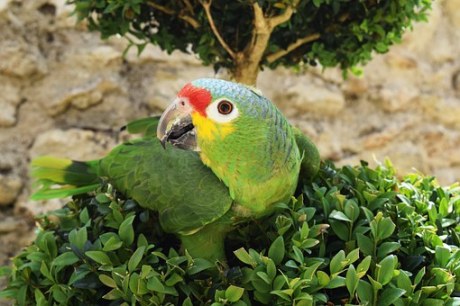
Whenever there was a lull in the monkey symphony, we heard roosters from somewhere beyond the fence and, to top it off, cows mooed to provide the bass.  On percussion, a flock of parrots chattered as they darted between surrounding trees.

“Is it always like this?” I asked Alan, astonished.

“Not always this loud,” he said.  “There’s a hawk or something scaring parrot-807303__340the parrots.”  He motioned skyward where a massive bird I thought resembled a pterodactyl circled.

“Let me take this all in,” I said, pausing to look around.  “This is incredible.”

“Hey, there’s a reason they shot ‘Jurassic Park’ in Costa Rica,” said Alan, smiling.

Alan and I hit for an hour.  For a beginner, he wasn’t bad.  After we finished, I paid a piddling sum at the office to become a “visiting member” of the Club and walked back with Alan to retrieve his clean car.

The next morning, I saw Brett.

“Alan said you enjoyed the tennis scene yesterday,” he said.

“That’s a good way to put it,” I said.  “The actual tennis was okay.  But I will definitely remember the setting forever.”

“Listen,” he said, “there’s a few lots in there you might be interested in buying.  They can’t miss!”

“Hasta la vista, Brett,” I said, retreating.  “You’ve already helped enough!”


CLOTHING CONNECTION

Gifted at soccer, trained as an educator and filled with sociable energy, my oldest child has chosen to become a fashion designer. It’s ironic on a number of levels not least of which is that Kelly was not exactly, shall we say, rigorous in her fashion choices as a youngster. During her teenage years, in fact, she wore the same corduroy jacket, jeans and wool cap for weeks on end. By high school, whenever she needed to dress nicely, she relied upon her nine-year-old sister for guidance.

Now just over thirty, with her wife, Laura, Kelly is consumed with the establishment of their firm, “Kirrin Finch,” which will offer clothing to women with tomboyish tastes. Together, they are selecting fabrics, buttons and cuts with meticulous care. No detail is too small for them to debate, in a constructive way, in a heartfelt drive to “get it right.”

What would Lou Sanders have thought about this?

*****

My father didn’t set out to spend a fifty-year career in the clothing business. When he finally arrived in Philadelphia from Kiev, via Cuba, he took the first job that was offered, behind the counter at a delicatessen. Immediately, he found the smell of fish on his hands to be repulsive and, after several months, quit to become a clothing salesman.  Shortly thereafter, in the late 1920’s, he rented a space to house his own shop. By the early 1940’s, he’d bought a neighboring building and moved his business, Lou Sanders’ Men’s Shop, into it. There it continued until 1981.

Unlike Kelly, my father didn’t aspire to the creative aspects of the business. He also had no interest in manufacturing. He was a salesman. I’m not even sure it would have mattered to him if his product were clothing or hardware or tires, so long as it wasn’t fish.

*****

Kelly also didn’t come to fashion as a foregone conclusion. As recently as a year ago, she and Laura considered opening a restaurant as their enterprise. Their consideration of businesses so unrelated to their professions raised eyebrows.

“Why not just keep teaching and pharmaceutical marketing?” someone asked Kelly and Laura, respectively.

“We want to do something together,” said Kelly.

“Fair enough,” concluded the Greek chorus. “But what makes you think you can just parachute into a business or career without any preparation?”

“You’ll see,” they said, to the skeptics.

And we have. On their honeymoon, Kelly and Laura clearly spent countless hours churning through the possibilities. They identified the lack of female-proportioned clothing available to tomboys as a need to be addressed; they concluded they were the perfect team to solve the problem. Not content merely to spend money and hire professionals, Kelly and Laura have set themselves on a vigorous course of education to become experts in the field.

Utilizing their existing skills in marketing (Laura) and networking (Kelly) they have created a business plan, social media buzz and gained acceptance to Pratt Institute’s prestigious incubator for new fashion entrepreneurs. a major accomplishment. To our alarm, Kelly even asked to borrow our sewing machine; that might be taking the “do-it-yourself” mentality a step too far.

“How do you turn it on?” she asked.

*****

My father loved his time at the Store. It was where he was most comfortable. But I don’t believe he cared about the product. He wasn’t solving a problem or addressing a need, except for his need to make a living. Not given to reflective communications, he never expressed anything about the subject of men’s clothing, even while devoting half a century to the cause. Sure, he preferred dressy clothing to denim. And he certainly wouldn’t have approved of ripped jeans under any circumstances. But these preferences could just as well have been expressed if he’d become an insurance agent or a lawyer.

He held many beliefs deep within a well of silence. We weren’t always sure about the inner workings of his mind. But the preferences he did feel sharply, such as that his sons marry within their faith, were communicated with an extreme clarity, spoken or not. When he first met my wife, Katie, who is not Jewish, he closed his eyes, leaned back his head against the couch and proceeded not to speak for the rest of the afternoon.

Several months later, when it appeared Katie and I might stay together, to my great relief, he refrained from an angry display. Certainly already chastened by my mother, he broached the subject of his disapproval with subtlety, even graciousness.

“She’s pretty. She’s smart,” he conceded, then continued, with his coup d’ grace: “But she’s a little older.” This from a man who had married a woman fifteen years younger and made known he felt that was a good idea.

He left out the major facts that she was also Unitarian, divorced and the mother of a two-year-old daughter.

“How will he be with Kelly?” Katie and I fretted.

“Will he accept her?” we wondered.

If he rejected her, Kelly would sense it, to say nothing of the resentment Katie would feel.   To say we were concerned with their introduction to each other is a vast understatement. Yet, when the time came, Lou Sanders instantly abandoned all his inhibitions about religion, about divorce, and about step-grandchildren, a relationship he would have scoffed at as tenuous, at best, in any other family.

He loved Kelly like his own grandchild immediately, indistinguishable from his other six. Katie, too, was accepted as a beloved daughter-in-law from the moment it became clear she would not be going away. Did Lou reach this accommodation easily? Probably not. But once he got there, Lou Sanders didn’t look back.

*****

Perhaps that is the closest connection he has to Kelly and Laura’s new enterprise. It doesn’t matter what the subject matter is. It’s just coincidence Kelly is entering the field of clothing where my father “played” for so long. In the important ways, when push comes to shove, Kelly is going about it the right way, all in. And as a grandfather to Kelly, when he could have fallen so much shorter, Lou went all the way. If Lou Sanders’ Men’s Shop existed today, doubtless he’d feature a new line on display the moment it becomes available: Kirrin Finch: menswear apparel for women.